
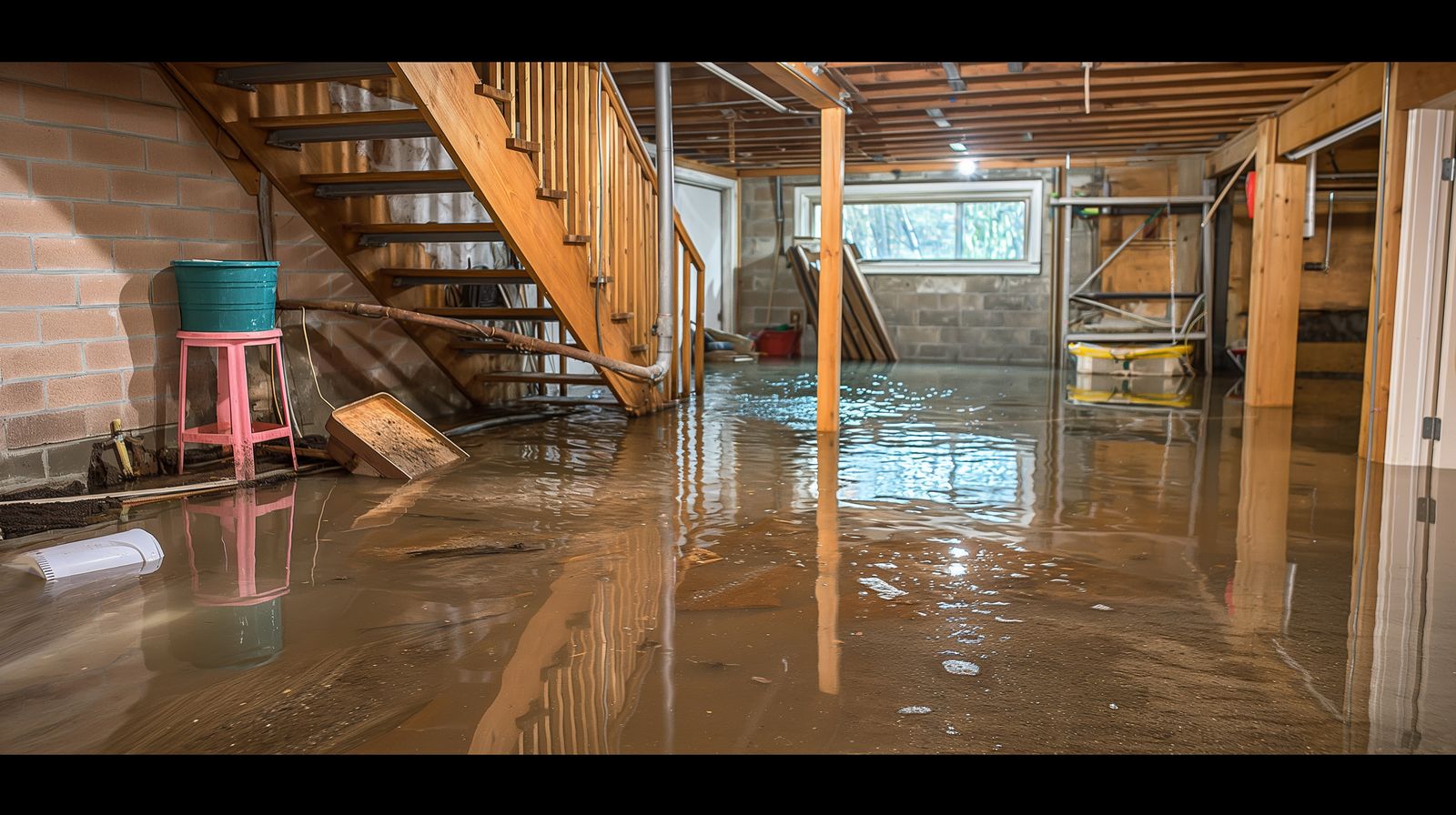
Flooded Basement Cleanup in Decatur, GA
Flooded basement cleanup is the process of safely removing water from a below-grade space, taking out materials that can't be salvaged, drying the structure, and sanitizing what remains. It starts with electrical safety rather than a pump — standing water in a basement is an electrocution risk until power to that level is confirmed off. From there the work moves through extraction, material removal, structural drying, and disinfection. Call (678) 582-2476 for 24/7 emergency response. Basements collect water because they sit at the lowest point of the property, and once water is in, it has nowhere to drain and little to evaporate into. That's what turns a few inches into a job touching flooring, walls, mechanical equipment, and everything stored down there.
Why Basements Flood Around DeKalb County
Heavy Storms and Saturated Red Clay
The soil under most of DeKalb County is heavy red clay. It drains slowly, so during the long, intense thunderstorms this region gets, it saturates and sheds the rest of the rainfall across the surface — often straight toward the nearest foundation. Water pools against the wall, gains hydrostatic pressure, and works through whatever opening exists. Yards sloping toward the house, downspouts discharging too close to it, and clogged gutters all make it worse.
Sump Pump Failure
A sump pump is the one piece of equipment standing between a groundwater problem and a flooded basement, and it fails at the worst time — mid-storm, when it's running hardest, or during the outage that comes with it. Stuck float switches, burned-out motors, clogged discharge lines, and undersized pumps are all common, and a pump with no battery backup is offline the moment the lights go out.
Foundation Seepage and Cracks
Older homes near downtown Decatur often have block or poured foundations that shifted through decades of clay soil expanding and contracting. Hairline cracks, gaps at the cove joint where wall meets slab, and deteriorated mortar all let water in slowly. Seepage rarely arrives as a dramatic event — it shows up as a damp corner, then a wet floor after every hard rain.
Burst Supply Lines and Appliance Failures
Not every flooded basement comes from outside. Supply lines to water heaters, washing machines, and utility sinks live down there, and a failed line releases water until someone shuts the main off. Since basements aren't visited daily, these leaks often run for hours unnoticed.
Safety Comes Before Cleanup
Standing Water and Electricity
Basements hold the electrical panel, floor-level outlets, extension cords, and mechanical equipment. Do not walk into standing water until power to that level is off, and don't reach for the panel if it sits in the flooded area — that's a call to the utility or an electrician. Submerged water heaters and furnaces should be treated as compromised until a professional checks them.
Knowing What's in the Water
Water is categorized by what's in it, and the category drives what can be saved. Clean water comes from a supply line and is least risky. Gray water has passed through an appliance or fixture — a washer discharge, a floor drain backup — and carries contaminants. Black water includes sewage or anything that traveled through soil and debris on the way in, which is why storm flooding is treated as contaminated. Category also worsens with time — clean water sitting a day in a warm basement doesn't stay clean.
The Cleanup Sequence
Step 1 — Power Safety and Stopping the Source
Power to the affected level is confirmed off and the source is addressed — the main is shut, a failed pump is bypassed with portable pumping, or the entry point is found so extraction isn't fighting an endless inflow.
Step 2 — Extraction
Submersible pumps handle the bulk volume, then truck-mounted or portable extraction units take the rest down to a damp surface, including water pulled from carpet and pad, fast enough that it stops migrating into walls and contents.
Step 3 — Removing Saturated Materials
Anything that holds water and can't be dried in place comes out: carpet pad, wet insulation, soaked particleboard, and drywall cut back above the waterline so the cavity can dry. Removing material isn't damage — it's what keeps the wall from staying wet after everything looks finished.
Step 4 — Drying the Structure
Air movers and dehumidifiers run continuously as a closed drying system, with moisture readings taken daily until framing, subfloor, and masonry match unaffected areas. Basements take longer than upstairs rooms because there's little natural airflow and the surrounding soil keeps them cool and damp.
Step 5 — Sanitizing and Deodorizing
Affected surfaces are cleaned with antimicrobial products suited to the contamination category, and odor is addressed once the space is dry. Sanitizing a wet basement accomplishes little — treatment follows drying, it doesn't replace it.
Finished and Unfinished Basements Are Different Jobs
Unfinished Basements
An unfinished basement is mostly masonry, concrete, and stored belongings. The structure is usually salvageable — block and concrete dry and clean up well — so the work concentrates on extraction, drying, disinfecting, and triaging contents. Cardboard boxes on the floor are typically the biggest loss, which is the argument for shelving and plastic bins.
Finished Basements
A finished basement adds carpet, pad, drywall, framing, trim, and often built-ins. Carpet pad is almost always removed; carpet itself may survive a clean-water loss but generally not contaminated flooding. Drywall that wicked water is cut back rather than dried in place. Framing lumber, solid wood trim, and hard-surface flooring over concrete can often be saved if drying starts quickly. Laminate, MDF baseboard, and particleboard cabinet bases swell and delaminate once saturated.
Contents and Belongings
Basements are where households store what they can't replace — photographs, documents, furniture. Non-porous items usually clean up well; porous items that absorbed contaminated water often aren't worth salvaging, and that call gets easier the sooner it's made.
Documenting the Loss for Insurance
What Gets Recorded
Before anything is removed, affected areas are photographed and the water line documented, along with moisture readings, materials involved, and an inventory of what was discarded and why. Daily drying logs continue that record. Whether a basement flood is covered depends on the policy and the cause — a failed supply line, groundwater seepage, and a sewer backup are treated very differently by most carriers, and water backup coverage is often a separate endorsement. A claim supported by photos and written readings moves far easier than one built on memory alone.
Serving Decatur and Surrounding DeKalb County
Decatur and Nearby Communities
Flooded basement cleanup is available throughout Decatur and nearby communities including Stone Mountain, Clarkston, and Chamblee.
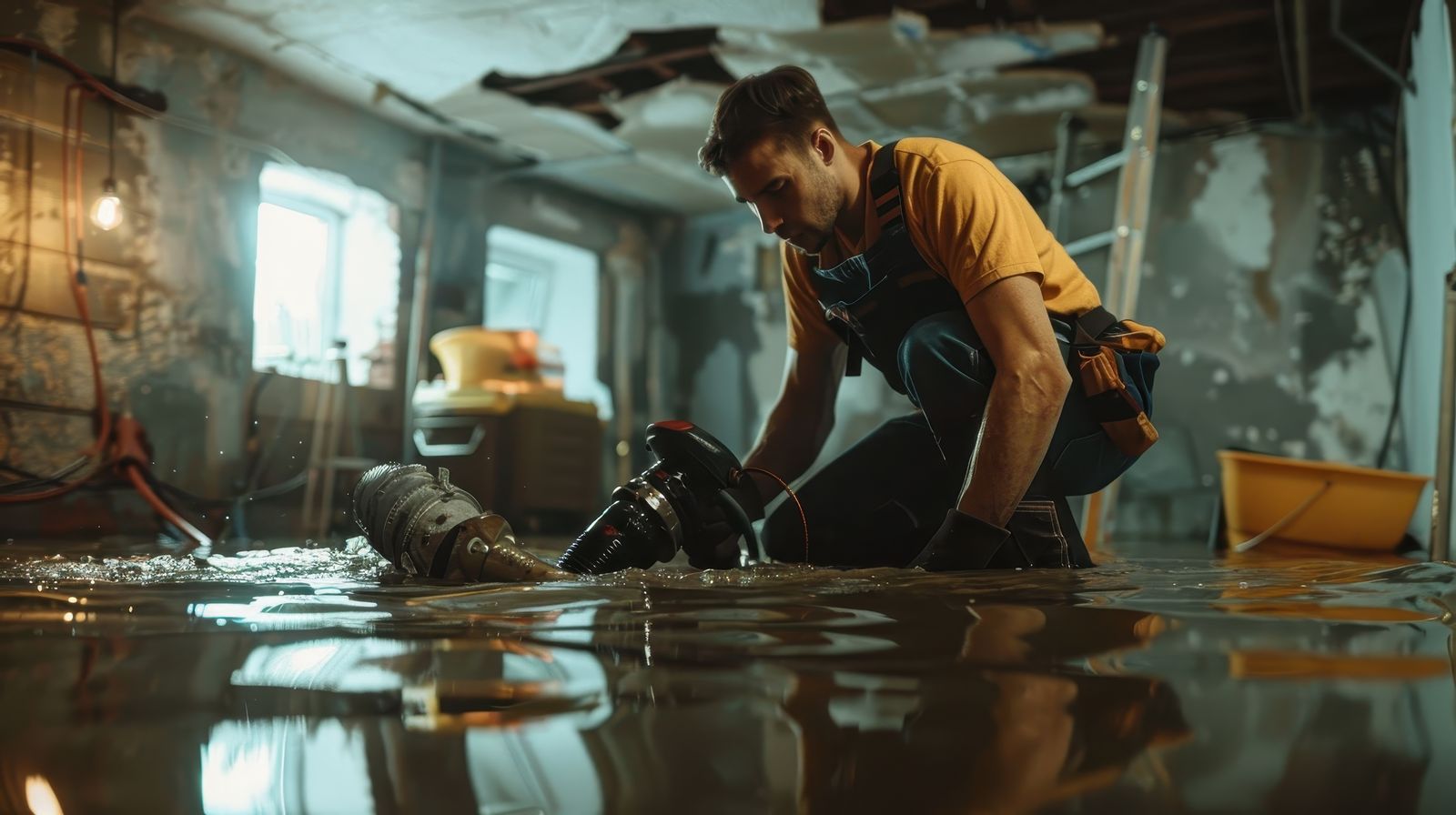
Water damage restoration in progress — Decatur, GA
Water in your basement doesn't drain on its own, and every hour it sits costs you more material. Call (678) 582-2476 for 24/7 flooded basement cleanup.
24/7 emergency response · Free on-site damage assessment
📞 Call (678) 582-2476Get Emergency Help
No obligation · Available 24/7
Takes 60 seconds · No obligation
Related Articles
Why Choose Us?
- Licensed & Insured
- Locally Operated
- 24/7 Emergency Response
- Free Damage Assessment
- Insurance Documentation
- Industrial Drying Equipment