
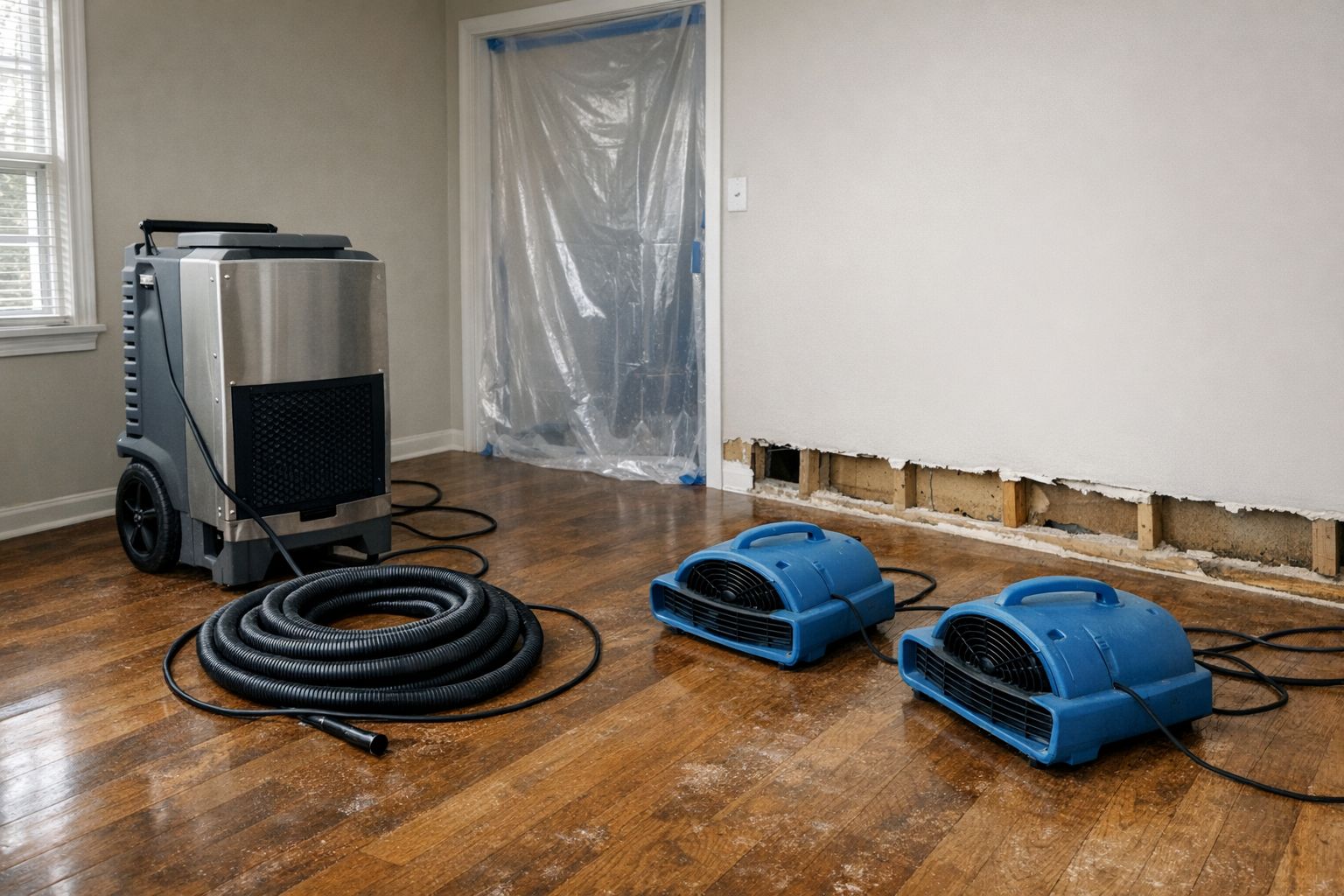
Structural Drying in Decatur, GA
Structural drying is the controlled removal of moisture that has soaked into a building's materials — framing, subfloor, drywall, insulation, and concrete slab — after the standing water has already been pumped out. It's done with air movers and dehumidifiers working together, and verified by moisture readings logged daily until materials return to normal levels. Most properties dry in roughly three to five days, though badly saturated or hard-to-reach areas take longer. Call (678) 582-2476 to have drying equipment placed at your property. Pumping out the visible water is the half of the job everybody notices. The half that decides whether a property recovers happens over the following days, inside the walls and under the floor.
Why Extraction Alone Isn't Enough
Water Doesn't Stop at the Floor
Building materials are porous. As water spreads across a room, drywall pulls it upward through capillary action, subfloor absorbs it from below, and insulation holds it like a sponge inside the wall cavity. By the time the standing water is extracted, much of the total moisture is already locked into the structure — behind baseboards, under cabinet toe kicks, in the gap between flooring and subfloor. Extraction removes the water you can see; structural drying removes the water you can't.
The Materials That Hold Moisture Longest
Not everything dries at the same rate. Hardwood flooring, engineered subfloor, plaster and lath in older homes, dense insulation, and concrete slab all release moisture slowly. Original hardwood in the bungalows around downtown Decatur is the classic example: the surface feels dry within a day while the boards and subfloor beneath sit well above a safe reading. Stopping there is how cupped floors and staining show up weeks later.
Air Movers and Dehumidifiers Do Two Different Jobs
What Air Movers Do
Air movers are high-velocity fans placed at low angles along walls and across flooring. Their job isn't to blow water away — it's to break up the thin layer of saturated, still air sitting against every wet surface, which otherwise acts like a lid on evaporation. Moving air strips that layer off and pushes moisture out of the material and into the room, where the dehumidifier can take it. Placement matters more than quantity.
What Dehumidifiers Do
Air movers put moisture into the air; dehumidifiers take it out. A commercial unit pulls in humid air, condenses or absorbs the vapor, drains it away, and returns drier air so the cycle repeats. Without enough dehumidification, air movers only relocate moisture — raising room humidity until evaporation stalls, and sometimes pushing damp air into rooms that were never affected.
Why the Two Have to Be Balanced
A drying setup is a system, not a pile of equipment. Air movers are matched to affected square footage and materials; dehumidification is matched to air volume and expected water load. Too little of either and drying stalls — which is why a rented fan and a household dehumidifier rarely finish anything larger than a small spill.
Moisture Readings and Drying Logs
Establishing a Dry Standard
Before equipment goes in, moisture meters are used on affected materials and on the same materials in an unaffected part of the property. That second set of readings is the dry standard — the target the wet areas have to reach. Without it, calling a property dry is an opinion rather than a measurement. Temperature and humidity are logged alongside the material readings.
What Daily Monitoring Looks Like
Each day the same points are re-checked and written down: material moisture content, room humidity, temperature, and dehumidifier output. Those numbers show whether drying is on track or has flattened out. If a reading isn't falling, something changes — equipment is repositioned, trim or drywall is opened so airflow reaches a trapped cavity, or a hidden moisture source is tracked down. That drying log is also the cleanest record you can hand an adjuster.
How Long Drying Takes and Why It Varies
Typical Timelines
Most residential drying runs three to five days with equipment running continuously. Quickly-addressed losses on tile or vinyl finish sooner; saturated hardwood, plaster walls, crawl spaces, and anything involving a slab can run considerably longer.
What Moves the Timeline
Several things drive the difference: how long the water sat before extraction, how much material absorbed it, whether it was clean or contaminated, how accessible the wet areas are, and the outdoor humidity the dehumidifiers work against. Equipment also has to run continuously — shutting the fans off overnight because they're loud is a common reason a job stretches out.
What Happens When a Property Is Only Surface-Dried
Moisture Trapped Behind Walls and Under Floors
When drying stops at what's visible, water stays in the wall cavity, the insulation, the subfloor, and the framing — and it doesn't stay put. It migrates through the structure, feeds odors, swells wood products, and surfaces later as staining, soft spots, or a smell nobody can locate. Worse, repairs get built on top of wet material, so the finish work has to come back out.
The 24 to 48 Hour Window
Mold needs moisture, an organic food source, and time. Drywall paper, wood framing, and insulation supply the food, a wet structure supplies the moisture, and the time frame is short — growth commonly begins within 24 to 48 hours of materials staying wet. That window is why drying is treated as an emergency, not a follow-up appointment.
Why Passive Drying Is Unreliable in Georgia
Humid Air Can't Absorb Much More Water
The standard advice to open the windows and run a box fan assumes outside air is drier than the air indoors. In a humid subtropical climate like metro Atlanta's, that often isn't true — pulling in warm, moisture-heavy air can raise humidity inside a wet structure instead of lowering it. Controlled drying works because the chamber is closed and the dehumidifiers, not the weather, decide how dry the air gets.
Crawl Spaces, Basements, and Older Decatur Homes
Crawl space foundations are common throughout Decatur's older neighborhoods, and they stay cooler and damper than the living space above. Air barely moves down there, so a wet crawl space holds moisture and pushes it up into the floor system and framing. Finished basements trap water the same way behind below-grade walls and framed partitions. Newer construction toward the DeKalb County line dries differently again — slab foundations and tighter envelopes hold humidity in unless it's mechanically removed.
Serving Decatur and Surrounding DeKalb County
Decatur and Nearby Communities
Structural drying, moisture monitoring, and equipment placement are available throughout Decatur and nearby communities including Avondale Estates, Tucker, and Brookhaven.
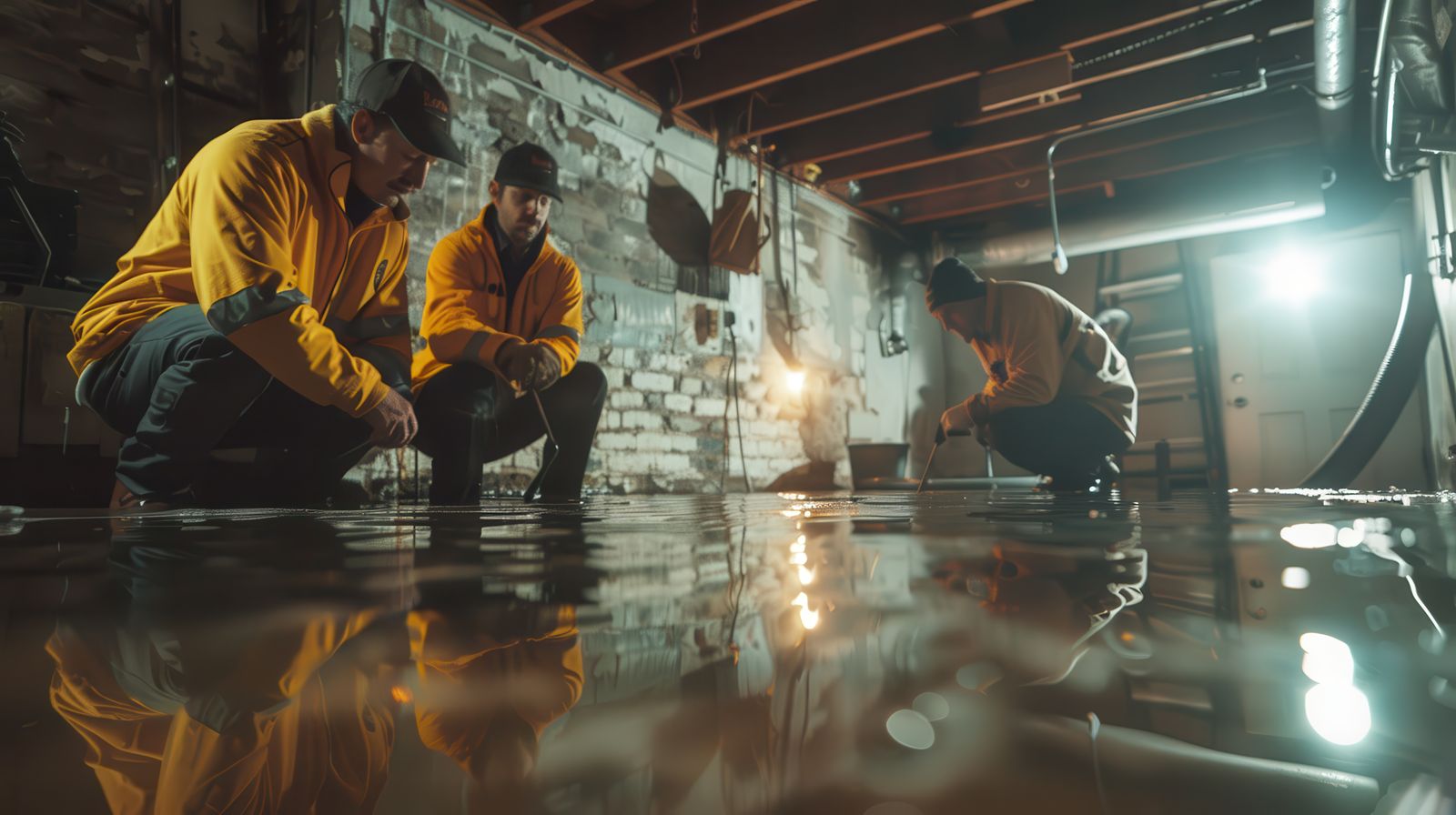
Water damage restoration in progress — Decatur, GA
Water that was pumped out isn't the same as a property that's dry. Call (678) 582-2476 for 24/7 structural drying and moisture monitoring in Decatur.
24/7 emergency response · Free on-site damage assessment
📞 Call (678) 582-2476Get Emergency Help
No obligation · Available 24/7
Takes 60 seconds · No obligation
Related Articles
Why Choose Us?
- Licensed & Insured
- Locally Operated
- 24/7 Emergency Response
- Free Damage Assessment
- Insurance Documentation
- Industrial Drying Equipment